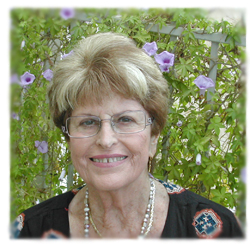
Ada Aharoni IFLAC is a voluntary Association that strives for peace by building bridges of understanding and peace through culture, literature and communication. IFLAC is founded and directed by Writer Ada Aharoni (Ph.D), since 1999.


Email: iflac@bezeqint.net
Ada Aharoni's Homepage
Books by Ada Aharoni
Poems by Ada Aharoni: Peace Poems | Women Poems
Twitter: @AdaAharoni

Poem of the Month, February 2012

Audio version 


THE POOR

All the Poor with Plenty Fed

By Ada Aharoni

Is Dryden’s Mirabilis dream -
“All the poor with plenty fed,”
Reachable at last in our own fat days?

Mother, oh mother I’m so hungry
I have sharp-toothed rats in my stomach!

What would it take today
For all the poor to be plenty fed?
Should the rich grab less and let
Some juicy morsels fall
Into the laps of hungry children?

Mother, oh mother I’m so hungry
I have sharp-toothed rats in my stomach!

Should bank managers get only
Three times more salary than their staff
And not a hundred times more?
 
When will governments understand
That it is nobler and more sociable
To feed the poor than to
Feed their guns with deathly bullets
And their tanks with shells,
Rockets and napalm

Mother, oh mother I’m so hungry
I have sharp-toothed rats in my stomach!

Can the dream come true today?
Don’t be a Don Quixote!
The rich will go on being richer
The poor will go on being poorer
And hungry children will go on dreaming
Of delicious banquets when they go to sleep
On craving empty stomachs

Mother, oh mother I’m so hungry
I have sharp-toothed rats in my stomach and in my belly!


Builders of Peace / Constructores de Paz

Somos constructores de paz en el mundo, We are builders of peace in the world …

“I had long wanted to do a song for peace interpreting the feeling of many people who sow seeds of harmony to build a true peace in the world,” says Héctor José Cuervo Corridor, Colombian Poet and retired Colonel, and IFLAC Delegate in Bogotá.

Inspired by Ada Aharoni’s lecture Vivre Ensemble (Living Together), which she gave at the Festival of Poets in Paris in 2009, he wrote Constructores de Paz (Builders of Peace). The song is put to music and sung by Henry Angarita, also from Colombia.

Here it is. Listen and enjoy!

See the Spanish lyrics below the English translation:


BUILDERS OF PEACE

Lyrics: Héctor José Cuervo Corridor
Sung by: Henry Angarita
Translated from Spanish by: Maria Cristina Azcona

In fields full of hate and violence
irrigate words of faith and hope,
awakening peoples with indifference
who are dying for lack of union alone.

In lamps of equal minds we
noble paths that guide actions
to save the lives of humanity
agonies suffered by the explosions.

We are builders of peace in the world
sowing seeds of kindness,
with a clean soul, with deep love,
in drills yearnings for freedom. (Bis)

We want to float the white flag
sublime symbol of peace and brotherhood,
that in all towns where there is war
reborn faithful friendship flowers.

Union!, Is the cry that all launched
great nation to rise again,
under the clear sky we dream
without feeling pangs in the heart.

We are builders of peace in the world
sowing seeds of kindness,
with a clean soul, with deep love,
in drills yearnings for freedom. (Bis)


CONSTRUCTORES DE PAZ

Autor: Héctor José Cuervo Corridor
Canta: Henry Angarita

En campos colmados de odio y violencia
regamos palabras de fe y de ilusión,
despertando pueblos con indiferencia
que agonizan solos por falta de unión.

En mentes llevamos lampos de igualdad
que orientan senderos de nobles acciones
al salvar las vidas de la humanidad
que sufre agonías por las explosiones.

Somos constructores de paz en el mundo
sembrando semillas de cordialidad,
con el alma limpia, con amor profundo,
en surcos de anhelos por la libertad. (Bis)

Queremos que flote la blanca bandera
símbolo sublime de paz y hermandad,
que en todos los pueblos donde exista guerra
renazcan las flores de fiel amistad.

¡Unión!, es el grito que todos lanzamos
para que resurja grandiosa nación,
bajo el limpio cielo con el que soñamos
sin sentir angustias en el corazón.

Somos constructores de paz en el mundo
sembrando semillas de cordialidad,
con el alma limpia, con amor profundo,
en surcos de anhelos por la libertad. (Bis)


Letter to the Prime Minister of Japan on nuclear safety

Dear Prime Minister Yoshihiko Noda,

Re: Nuclear Safety for Japan and the World

We at the NGO – IFLAC, The International Forum for the Literature and Culture of Peace, express deep sympathy at the enormous earthquake and tsunami that struck Japan on March 11th 2011, and moreover, the nuclear accident in Fukushima. All the members of IFLAC heartily pray for a quick recovery and the true convergence of the severe accident. Furthermore, we highly respect the nuclear plant workers struggling for convergence regardless of radiation exposure.

We, at IFLAC, which is a volunteer organization that works for peace through culture, literature, and communication, also aim to save lives of women and children who are socially vulnerable, and contribute to the peace and safety in the Middle East and in the whole world. IFLAC was established in 1999 by writer and researcher Ada Aharoni (Lit.D.). It is an organization which highly respects democracy and peace, and one of the international NGOs independent from any country’s government or religion. IFLAC members consists of 22 countries: Canada, America, Russia, France, Israel, Turkey, Cameroon , Japan, China, India, Korea, Norway, Romania, Hungary, Spain, Greece, Bosnia-Herzegovina, Australia, Brazil, Argentina, Uruguay and Colombia.

9 months have passed since the level 7 nuclear accident occurred in Fukushima, and yet it hasn’t been settled. Furthermore, 4 types of nuclear plants, including the latest plutonium-thermal, caused the accident. We at IFLAC consider them serious matters and demand the Japanese Government the following requests:

1) Promptly release all precise information, including the diffusion of radioactive substances, to Japanese citizens as well as to the world
By knowing the right information, each citizen will be able to make decisions by themselves and take measures to avoid unnecessary exposure. Japanese citizens are moderate and patient people. They will not cause panic or confusion as soon as they hear the truth. This is proved by the fact that the world was surprised by their orderly behavior after the disastrous earthquake. The possibility or the amount of compensation can be discussed later. In any case, it is the first preference to honestly release all information concerning radiation so that every people living in Japan, including foreigners will be able to keep the amount of internal and external exposure as low as possible.

It is disappointing that the recent Japanese government plays down its original rules about radiation protection, and continues to say “Eating those food will not cause health problems” or “Not taking shelter will not cause health problems” because they are “below” the watermark. It seems as if the government is giving priority thinking how to lessen or reduce the amount of the future compensation, when the government’s foremost need is to take care of the dangerous exposure for all the people living in Japan.

2) Do not re-operate all nuclear power plants that are under suspension
Some of the Japanese nuclear plants are quake-resistant to M7.6, which is higher than the standard of M6.5 which IAEA demands. However, they could not stand M9.0 of the recent earthquake. In Fukushima, the power cables first collapsed due to the earthquake, and after losing external electricity the tsunami struck. We know from the news that the power plants in Fukushima are still in critical state. We read newspaper articles and saw pictures of a hose 4 km long which sends a vast amount of water to cool down the nuclear reactors and avoid critical resumption. We also found out that the electric cables are laid to the ground uncovered, and we need to rely on temporary equipment under the present circumstances. At the places where the tide walls once existed there are only temporary walls sandbagged by packed stones. Can this temporary equipment endure the next earthquakes and tsunamis?

In addition, the cause of the accidents has not yet been clarified. We were surprised to hear that the officially announced temperatures of the nuclear reactors are estimated from other data, because in the present situation it is still unable to measure the temperatures directly. Therefore, it is ridiculous to re-operate other nuclear plants in a situation where the process of settling down hasn’t been established for over 9 months once an accident occurs.

3) Please do not build new nuclear power plants anymore, and sequentially decommission all the existing nuclear power plants, like the German Prime Minister Angela Merkel and the Swiss Government, that made wise decisions in response to the disastrous situation in Fukushima.

4) Do not export nuclear power plants to overseas
We request the Japanese Government to withdraw nuclear power plant exportation to Turkey, Jordan, Vietnam, and India, that are also countries subject to earthquakes. Especially at the construction site of Jordan, they can only reserve 15 days of water that will be necessary in case of an emergency. We can assert that they clearly lack any emergency measures.

According to Proceedings of the National Academy of Sciences of the USA (PNAS) published on November 15th 2011, the edaphic radioactive substances diffused from March 20th to April 19th by the nuclear accident in Fukushima were more widely spread than the announcement of the Ministry of Education Culture, sports, Science and Technology in Japan, admitted. Within the range of 250 km, many places are marked as 250 Bq/kg, and in the amount of cesium 137. In some sections 750 km apart from the Fukushima power plant, it was marked 100 to 250 Bq/kg. Differently from Japan, the countries in the Middle East are connected by land. If similar accidents occur in the Middle East, the problems will be more complex and much more dangerous to the whole region and to the whole world.

5) Please, immediately restore the present Japanese provisional standard values for the radioactive levels of food to the international standards
The provisional standard of International Commission on Radiological Protection (ICRP) is set as a permissible amount for about a week after an accident. Therefore, stop using this standard value for over more than 9 months.

Internal exposure, which is mainly absorbed from ingestion, is said to be more dangerous than external exposure. In case of cesium 137, the Japanese provisional standard value of water is 200 Bq/kg, while the limit value of waste water from nuclear plants based on the international law is 90 Bq/kg. This means drinking water said to be safe in Japan is more than two times polluted, due to waste water from nuclear plants. Also, in Belarus, the present safety limit value of food for children is 39 Bq/kg, while in Japan; groceries under 500 Bq/kg are considered safe and taken to the market without showing the value. This is more than ten times of the value in Belarus. Taking account of the great amount of external exposure continuously sustained from the air after the accident, please restore the total value of internal and external exposure to the international standard value of 1 mSv per year.

Data shows that children and women are more than twice as likely as men to develop cancer due to radiation exposure. Moreover, as the report from PNAS in 2009 shows, the number of patients considered being ill due to radiation after the accident in Chernobyl reached nearly 1 million including numbers that weren’t reported in English, in spite of the fact that food standard is far more strict than that of Japan. How would Japan be if this situation keeps going for years?

6) Do not delist evacuation zone at this stage, when the accident is not converged, nor the possibility of critical resumption can be denied, nor the decontamination excluding public facilities is completed. On the contrary, expand the evacuation zone according to the international standard.

Internationally, areas that mark 0.6 µSv/h are determined as radiation controlled areas, and labor of workers under 18 years old is banned. According to this criterion, in Chernobyl areas over 0.6 µSv/h (5 mSv/y) were determined as forced emigration zones. On the other hand, the Japanese watermark is 3.8 µSv/h (20 mSv/y), which is four to six times as that of Chernobyl. It is unbelievable for the Japanese Government to delist the evacuation zone with such a lax standard, in a time when the accident is still in disorder.

——————————————————————————————————

There are currently 431 nuclear power plants in the world including the numbers of those under suspension. Among all, 5 of the nuclear power plants brought about the worst level of 7 accidents. This is a probability of more than 1 percent. To mention only about Japan, 4 out of 54 caused the accidents, so these irretrievable accidents occurred with an 8 percent likelihood.

Meanwhile, Japan is the third largest country in geothermal energy following US and Indonesia, which is representative for its reusability, safety and stableness. While he visited Japan in 1991 after the Chernobyl nuclear accident, the former British Prime Minister, Margaret Thatcher, also advocated in her speech that abundant in sunlight, compared to the United Kingdom, Japan should make more efforts to develop efficient solar power systems. Within Japan this speech was rarely taken up, but later on there were times when eminent scholars from overseas were assigned to the current Ministry of Economy, Trade and Industry to study the possibility of high technologies of solar power generation in Japan.

Naturally derived methane hydrate, which won’t produce CO2, could be used as a secondary energy for the moment while developing renewable energy. It is also known overseas that untapped natural resources that match at least 100 years of the total amount of Japanese energy consumption are reserved in the areas from the open sea of Enshu Nada to Amami Oshima. If it is difficult for the Japanese Government to pursue this seriously, it is possible to invite nongovernmental or foreign capital for development.

Both the German Prime Minister Angela Merkel, who decided to abolish the use of all nuclear power plants, and the former British Prime Minister Margaret Thatcher, who mentioned the necessity of natural energy, are both scientists, as well as female prime ministers who give birth and bring up lives, and know their value. In Switzerland too the former Swiss representative of the International Physicians for the Prevention of Nuclear War (IPPNW), reported and advised the country’s government to thoroughly investigate reality of the Chernobyl disaster, and to abolish the use of all nuclear power plants.

Prime Minister Noda often mentions “children-first” and “safety operation”. Please give instructions that will save children’s lives “first” from radioactive pollution due to nuclear accidents. A country’s prime minister has an obligation to save its people’s lives, first of all. Immediately providing enough money necessary for compensation as a national budget might be difficult. However, you can sequentially stop all nuclear power plants and immediately announce international safety standards for food and evacuation zones. Please stop forcing unnecessary exposure to innocent children and residents. Whether the radiation comes from atomic bombs or nuclear plants, the victims are both hibakushas. It is clear that nuclear plants cannot coexist with humans by the fact that hibakushas keep emerging in the manufacturing process or even during the routine inspections.

Prime Minister Mr. Noda, please accept IFLAC’s advice that nuclear power plants are no longer necessary for the safe operation of “energy”.

Consequently, change your decision to continue the use of nuclear power plants, and follow the example of Chancellor Angela Merkel to abolish the use of all nuclear power plants.

You can show leadership as a pioneer of safety to the world.

Sincerely yours,

Dr. Ada Aharoni
President of World IFLAC

Poet and Writer Taki Yuriko
IFLAC Delegate in Japan


IFLAC Vision for 2012

Dear Friends,

The Indian poet Rabindranat Tagore wrote:

I slept and I dreamt that life was happiness
I awoke and saw that life was service
I served and saw that service was happiness.

I am confident that all of us at IFLAC feel the same way, and I congratulate you for your efforts to pave peace in 2011, and in your continued service of peace in happiness, in 2012.

As I write to you, the lives of hundreds of thousands of individuals around the world are dramatically changing. From the streets of the countries of the Middle East to Wall Street in New York, the grassroots power and possibility of the IFLAC vision of “peace, harmony and nonviolence” as a method of bringing about change, has been activated. Hope has been ignited and the hearts and minds of individuals all around the world have been unified in this hope.

It is a wonderful gift for 2012, to live in the true strength of this experiment called “peace, harmony and nonviolence” through Bridges of Culture, Literature and Communication. Some believe it is the way of the weak. But the IFLAC nonviolent approach calls to that which is at the heart of the matter – honoring the dignity, culture and worth of every individual – everywhere. It is deep rooted in a consciousness of morality, of connectedness. It looks for possibilities that have not been challenged, until one is engaged in its process.

As Mahatma Gandhi said: “Strength does not come from physical capacity; it comes from an indomitable will.” And when the will of a person or the will of a community of people is motivated by hope, and is unified through love of service – anything is possible.

We at IFLAC exist to demonstrate the power and possibility of “peace, harmony and nonviolence” in our personal and literary lives, in our International community. Our Nonviolence, Compassionate Communication and Dialogue through our daily IFLAC Digest, and our meetings and workshops, our Peace Train Project, our Peace Stories theatrical project, and our Peace Poetry Contest for Children were created to educate and activate the living presence of “peace and harmony” in ourselves, our families, and our communities. Our work at IFLAC is vital! It is life changing. It is powerful and life affirming, and its power and possibility speak to all people, of all ages, of all races, in every economic level.

It is with an open heart, and with great anticipation that we look forward to 2012 and the many opportunities that will unfold – that we may expand and grow in our practice and spreading of peace and nonviolence, in our understanding of how to communicate the power and possibility of harmony – and in our ability to creatively express hope, peace and nonviolence in the world at large.

As 2012 opens, please consider supporting and donating to the crucial work of IFLAC, and please consider joining our programs, our IFLAC Digest and this our IFLAC website. You make a difference! We need you: your talents, your creativity, your involved gifts, and your expressed commitment to a peaceful world beyond war. Without you we can only do so much; with you we can achieve exceptional levels of change and the betterment of our global village.

The very best to all and each of you in the New Year 2012.

In solidarity and peace,

Dr. Ada Aharoni
IFLAC Founding President

IFLAC website: www.flac.wordpress.com
Ada Aharoni’s Homepage: www.iflac.com/ada


Greeting to IFLAC for 2012

Dear IFLAC Directors, Members and Friends,

I wish a very joyful, peaceful and healthy New Year 2012 to each of you.

May the New Year 2012, fully recognize at last, that our IFLAC way: Peace through Bridges of Literature, Culture and Communication is so much better than violence, conflict, destruction and wars!

Please invite all your friends and colleagues to join us, by visiting and adhering to our rich and wonderful site and blog at: www.iflac.wordpress.com in which you can publish your thoughts and ideas, by commenting on thought-provoking articles and items.

This year, with your devoted and kind help again, we will attempt to double the members who have joined us through our site. Together, we will double our efforts in spreading our IFLAC values to the whole of our global village. We will continue in our noble attempt of creating a beautiful world of humane care and kindness for each other, a brave New World of Peace and Harmony – Beyond War, Terror and Violence.

With all the very best wishes to you and to your families,

Dr. Ada Aharoni
IFLAC Founding President


Poem of the Month, January 2012


MIMOSA EQUALITY

By Ada Aharoni

I wait for the day
blossoming as a mimosa
when half the world’s presidents
will be women
with caring arms
enlacing every cry.

And the sun will shine
on all mortals
with equal golden rays
in every green field,
every printed book,
every human look.


Rise, a novel of contemporary Israel

Rise by Yosef Gotlieb

Rise, a novel of contemporary Israel

Rise, Yosef Gotlieb’s new novel, is set in today’s Israel and is the story of a citizen’s movement of Jews and Arabs striving for change.

When interviewed, Gotlieb is often asked about the similarities between the citizen’s movement described in the book and the similar popular protest movements we witness elsewhere in the world today. His response is that people across the globe are no longer willing to be treated as objects to be manipulated by economic and social elites.

In her review of the book, Ada Aharoni writes:

In this fast moving and enthralling novel, full of suspense and dramatic events, Yosef Gotlieb presents us with a remarkable plot and characters, who rise to solve the most acute problems of contemporary Israel.

Lilah Kedem, an internationally renowned photographer, tries to solve the mystery of terror attacks on both Arabs and Jews, committed by the Gideons, through catching them on film with her camera. Together with her husband, Prof. Naphtali Kedem, head of the opposition at the Knesset, and friends, they found a citizen movement, “Naale” – we will rise, to help repair the wrongs of society and the bigotry that has infected it.

Lilah’s childhood friend Michal, who lives in Accre, is married to a Palestinian – the outstanding Dr. Halaby, and they too join the new movement and are very active in it. Together they try to bridge the gap of layers of misunderstandings, hurt and fury between the two people. Through Dr. Halaby, we are presented with the tremendous difficulties to reach a “sulha” – reconciliation. On both sides, the Israelis and the Palestinians, there are outraged people who blame him for helping the other side.

Mountains of misconceptions, distrust, fury and hatred swell on both sides, when buses full of innocent children and people are blown up by Palestinian terrorists, or when there are horrifying retribution actions by the Gideons. Eli Zedek, a security agent who has been assigned to trace down the Gideons, saves Lilah when she is attacked, and is most impressed by her and her actions to film the perpetrators of destruction.

However, above the intriguing plot, fascinating characters and dramatic movement of this unique book, its greatest value lies in the presentation of a constant ray of hope. The ultimate message we get is that if both the Israelis and the Palestinians succeed to rise to the challenge of reconciliation between them, the aspired vision of peace and well-being in Israel and in the whole region, can be reached.

This is a provoking novel of deep thought, written in a clear and beautiful language. It is a treat for all, which opens a window of fresh air into the intricate entanglements of the Arab-Israeli conflict, based on a humane and personal level, and it should be read by all.

Read more at Yosef Gotlieb’s website

Rise book trailer


The winning poems of the IFLAC International Poetry Contest for Children

“What is Peace to me?” That was the question IFLAC asked children in their invitation to participate in the 2011 IFLAC Poetry Contest.

“To me peace is a rare and wonderful sensation,
It trickles down your body like an egg.
The egg is cracked on your head.
And you feel this wonderful mood,
Sliding down your body.
And you start to feel at ease.
[...]“

This is how Grace Kwak (10) from Korea described the sensation of peace. Oriana Lefirnil (10) from Argentina wrote:

“La paz es belleza
Es la fragancia de un jardín de rosas
Un libro de poemas con historias de amor, de vidas
De sueños y de luchas
[...]“

Grace and Oriana were two of the 25 young poets between 9 and 14 whom the Judging Committee presented with an IFLAC Certificate for their contribution. There were two language groups: English and Spanish.

See the list of winners.

Here are the winning poems:

Winners of the 2011 IFLAC Poetry Contest Poems for Children


Poem of the Month, December 2011

This month’s poem is the winning poem in the age group 9-10 of the IFLAC International Poetry Contest for Children 2011. Chloe Choi is 10 and a student at the Seoul Foreign School in Korea.


WINTER’S HARMONY

By Chloe Choi

As I look around, above and underneath me, I moan
Can’t you all be silent as I view this sight alone?
No, I don’t mean completely alone.
I mean let the birds fly and sing their cute choir.
Let the snowflakes fall down as silent as they can to represent peace
To new earth. To a new place. To belong here, next to me, as I see them gracefully falling down.

But when I lift up some pile of snow that landed on new earth, I cry.
How can the earth’s beauty never last long?
Every snow I cup, they are all gone. All melting, all dying.
Every bird or animal I start to sing or try to play with,
They run away or stop doing what they’re doing. Scared.
But can’t I even get along? Isn’t that what peace is?
I don’t want to be left out.
I want to be on top of earth—on a mountain—like I am right now,
Sight-seeing the beauty of the wonderful snow-covered earth.

Oh God,
Let this sight last a little longer.
For the snow’s sake, please don’t disappear or leave me alone.
Let the snow keep falling.
Let the winter creatures keep on chirp, sing and do their work-to-do.
Let winter last longer. Even though it is freezing, I enjoy the sight.
I want the nature’s peace to keep going. Go naturally and peacefully.
Rest with me as I lay down on the top of the mountain. With peace.


The results of the IFLAC International Poetry Contest for Children

The results of the 2011 IFLAC Poetry Contest for Children: Peace for All are in.

IFLAC would like to thank the Judging Board of the Contest, all the children who took part in it, and the teachers who helped to organize the Contest and sent us the best poems.
 
Special thanks are due to Poet Maria Cristina Azcona, Director of IFLAC in Argentina and South America, and President of the IFLAC Peace Contest for Children, for having organized this important project in such an efficient and professional manner.

The seeds of peace planted in the minds and hearts of the children who wrote such beautiful peace poems, will guide them all their lives.

We look forward to a new Poetry Contest in 2012.

There were two language groups: English and Spanish. The winners are listed below. Congratulations!

Read the winning poems 


ENGLISH

Winners age 9-10:

1. Chloe Choi, Korea
2. Joseph Shiraz, Israel
3. Mercy Milliken, Korea


First mention age 9-10:

Christina Cho, Korea


Second mention age 9-10:

Grace Kwak, Korea


Winners age 11-12:

1. Gilad Shalit, Israel
2. Zvi Ronen, Israel
3. Rachel Lee, Korea


SPANISH

Winners age 9-10:

1. Oriana Lefirnil, Argentina
2. Abigail Evelyn Alonso, Argentina
3. Ignacio Nicolas Godino, Argentina


First mention age 9-10:

Cristian Alejandro Leria, Argentina


Second mention age 9-10:

Gonzalo Gabriel Olivera, Argentina


Third mention age 9-10:

Lucía Mantelli, Argentina


Special mention age 9-10:

Sofia Moreno Borbón, Argentina


Winners age 11-12:

1. Andrés Esteban Márquez, Argentina
2. Luciano Antonio Almeyda, Argentina
3. Elvio Barrios Ayala, Argentina


First mention age 11-12:

Valeria Escobar, Argentina


Second mention age 11-12:

Lupe Doménica Cabrera, Ecuador


Third mention age 11-12:

Mateo García Morales, Argentina


Winners age 13-14:

1. Pablo Leal, Spain
2. Catalina Terranova, Argentina
3. Melina Mohamed, Argentina


First mention age 13-14:

Raquel Kotyk, Argentina


Winner of the Special Schools category:

Autistic Children from Rosario City, Argentina


Read the winning poems


Follow

Get every new post delivered to your Inbox.